

Sienam Lulla

CEO Bryckel AI

AI in Real Estate: The Agents Have Arrived
What agentic AI actually means for AI in Real Estate, and why it's changing how CRE professionals work

What agentic AI actually means for AI in Real Estate, and why it's changing how CRE professionals work

AI in Real Estate: The Agents Have Arrived

First, What Is an AI Agent?

Before we get into the real estate angle, let's be clear about what "agentic AI" actually means — because it's not just a chatbot with a nicer interface.

A traditional AI tool answers a question. You ask, it responds. Full stop.

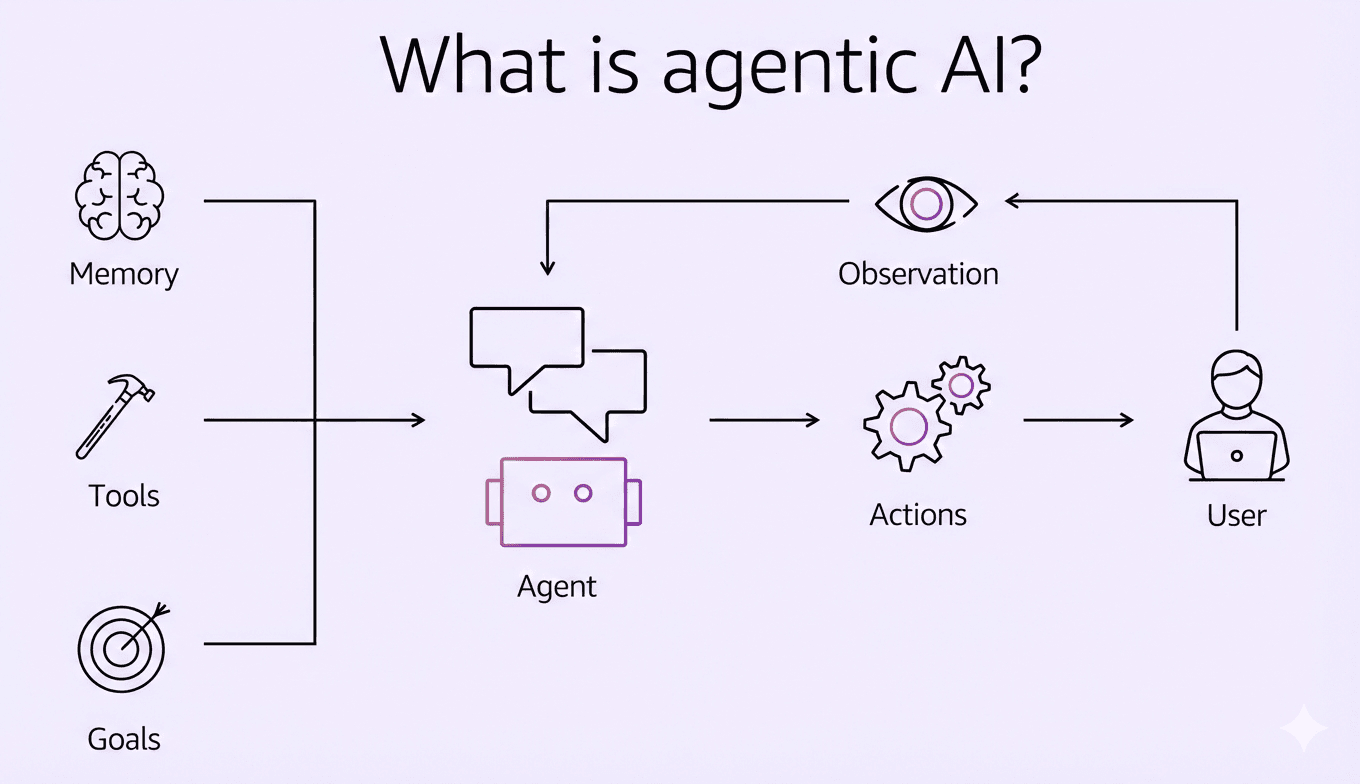
An AI agent does something more: it receives a goal, breaks it into steps, takes actions, evaluates the results, and keeps going until the job is done. It can call other tools, loop back when something doesn't look right, hand off subtasks to specialized agents, and escalate to a human when judgment is genuinely required. It's the difference between a calculator and a colleague.

And that distinction matters enormously in Commercial Real Estate, where the work isn't a single question — it's a chain of interconnected tasks buried in thousands of pages of documents.

Why Real Estate Is a Perfect Analogy (Seriously)

Here's where it gets fun. A great CRE broker doesn't just source a deal. They orchestrate — coordinating between tenant and landlord, attorneys redlining the lease, the property manager surfacing building issues, and the capital markets team modeling the financing. Every party has a specialized role, the handoffs have to be clean, and missing one detail — a notice deadline, a co-tenancy clause, a rent commencement date — can unwind months of work.

AI agents work the same way. They're not one model doing everything at once. They're a coordinated system: one agent extracts lease language, another validates it against your playbook, another calculates critical dates, another flags exceptions for human review. Specialized, sequential, and only as good as the handoffs between them.

The parallel isn't just cute. It's structurally accurate. And in CRE, it's showing up in real workflows right now.

Where AI Agents Are Working in CRE Today

Lease Review

When a lease lands on your desk, an AI agent doesn't just read it — it reads it against your playbook. It identifies every clause, compares it to your standard positions, and suggests replacement language where you're exposed. Attorneys stop spending billable hours on the first pass. Tenants get a faster, more consistent review. The agent handles the pattern recognition; the lawyer handles the judgment.

Lease Abstraction

Abstraction is where multi-agent architecture earns its keep. One agent reads the narrative — pulling out renewal options, notice requirements, rent escalation structures — and hands structured data to a second agent that does the math: renewal notice deadlines, rent roll projections, critical date calendars. Each agent specializes. Together, they turn a 200-page lease into a clean data record in a fraction of the time.

Deal Underwriting

Underwriting a CRE acquisition means pulling from offering memorandums, rent rolls, T12s, market comps, and broker opinions of value — often in different formats, from different sources. AI agents can ingest all of it, normalize the data, populate a proforma, and flag assumptions that fall outside market range. Analysts spend their time stress-testing the model, not building it from scratch.

Property Management & Tenant Communications

AI agents can monitor work order queues, triage maintenance requests by urgency and trade, draft landlord responses, and escalate anything touching lease obligations or liability to the right human. For large portfolios, this is the difference between reactive and proactive management.

Construction & TI Project Tracking

On tenant improvement buildouts, agents can track contractor submittals, compare progress against the project schedule, flag budget variances, and surface punchlist items — pulling from emails, invoices, and site reports without anyone manually updating a spreadsheet.

Market Research

Tenant rep and landlord rep brokers both need fast, accurate market intelligence. AI agents can continuously monitor availabilities, absorption trends, and lease comps across target submarkets — surfacing the right data when a pitch is being built, not after it's been sent.

The Bottom Line

AI agents in CRE are not here to replace expertise. They're here to handle the volume — the reading, the extracting, the calculating, the pattern-matching — so attorneys, brokers, landlords, and tenants can focus on the decisions that actually require a human in the room.

The best real estate agents have always been orchestrators: managing complexity, coordinating specialists, keeping the deal moving. Agentic AI does the same thing for information workflows. It just doesn't need a parking spot at the property.

The technology is here. The question is which firms build the muscle now — and which ones catch up later.

AI in Real Estate: The Agents Have Arrived

First, What Is an AI Agent?

Before we get into the real estate angle, let's be clear about what "agentic AI" actually means — because it's not just a chatbot with a nicer interface.

A traditional AI tool answers a question. You ask, it responds. Full stop.

An AI agent does something more: it receives a goal, breaks it into steps, takes actions, evaluates the results, and keeps going until the job is done. It can call other tools, loop back when something doesn't look right, hand off subtasks to specialized agents, and escalate to a human when judgment is genuinely required. It's the difference between a calculator and a colleague.

And that distinction matters enormously in Commercial Real Estate, where the work isn't a single question — it's a chain of interconnected tasks buried in thousands of pages of documents.

Why Real Estate Is a Perfect Analogy (Seriously)

Here's where it gets fun. A great CRE broker doesn't just source a deal. They orchestrate — coordinating between tenant and landlord, attorneys redlining the lease, the property manager surfacing building issues, and the capital markets team modeling the financing. Every party has a specialized role, the handoffs have to be clean, and missing one detail — a notice deadline, a co-tenancy clause, a rent commencement date — can unwind months of work.

AI agents work the same way. They're not one model doing everything at once. They're a coordinated system: one agent extracts lease language, another validates it against your playbook, another calculates critical dates, another flags exceptions for human review. Specialized, sequential, and only as good as the handoffs between them.

The parallel isn't just cute. It's structurally accurate. And in CRE, it's showing up in real workflows right now.

Where AI Agents Are Working in CRE Today

Lease Review

When a lease lands on your desk, an AI agent doesn't just read it — it reads it against your playbook. It identifies every clause, compares it to your standard positions, and suggests replacement language where you're exposed. Attorneys stop spending billable hours on the first pass. Tenants get a faster, more consistent review. The agent handles the pattern recognition; the lawyer handles the judgment.

Lease Abstraction

Abstraction is where multi-agent architecture earns its keep. One agent reads the narrative — pulling out renewal options, notice requirements, rent escalation structures — and hands structured data to a second agent that does the math: renewal notice deadlines, rent roll projections, critical date calendars. Each agent specializes. Together, they turn a 200-page lease into a clean data record in a fraction of the time.

Deal Underwriting

Underwriting a CRE acquisition means pulling from offering memorandums, rent rolls, T12s, market comps, and broker opinions of value — often in different formats, from different sources. AI agents can ingest all of it, normalize the data, populate a proforma, and flag assumptions that fall outside market range. Analysts spend their time stress-testing the model, not building it from scratch.

Property Management & Tenant Communications

AI agents can monitor work order queues, triage maintenance requests by urgency and trade, draft landlord responses, and escalate anything touching lease obligations or liability to the right human. For large portfolios, this is the difference between reactive and proactive management.

Construction & TI Project Tracking

On tenant improvement buildouts, agents can track contractor submittals, compare progress against the project schedule, flag budget variances, and surface punchlist items — pulling from emails, invoices, and site reports without anyone manually updating a spreadsheet.

Market Research

Tenant rep and landlord rep brokers both need fast, accurate market intelligence. AI agents can continuously monitor availabilities, absorption trends, and lease comps across target submarkets — surfacing the right data when a pitch is being built, not after it's been sent.

The Bottom Line

AI agents in CRE are not here to replace expertise. They're here to handle the volume — the reading, the extracting, the calculating, the pattern-matching — so attorneys, brokers, landlords, and tenants can focus on the decisions that actually require a human in the room.

The best real estate agents have always been orchestrators: managing complexity, coordinating specialists, keeping the deal moving. Agentic AI does the same thing for information workflows. It just doesn't need a parking spot at the property.

The technology is here. The question is which firms build the muscle now — and which ones catch up later.

AI in Real Estate: The Agents Have Arrived

First, What Is an AI Agent?

Before we get into the real estate angle, let's be clear about what "agentic AI" actually means — because it's not just a chatbot with a nicer interface.

A traditional AI tool answers a question. You ask, it responds. Full stop.

An AI agent does something more: it receives a goal, breaks it into steps, takes actions, evaluates the results, and keeps going until the job is done. It can call other tools, loop back when something doesn't look right, hand off subtasks to specialized agents, and escalate to a human when judgment is genuinely required. It's the difference between a calculator and a colleague.

And that distinction matters enormously in Commercial Real Estate, where the work isn't a single question — it's a chain of interconnected tasks buried in thousands of pages of documents.

Why Real Estate Is a Perfect Analogy (Seriously)

Here's where it gets fun. A great CRE broker doesn't just source a deal. They orchestrate — coordinating between tenant and landlord, attorneys redlining the lease, the property manager surfacing building issues, and the capital markets team modeling the financing. Every party has a specialized role, the handoffs have to be clean, and missing one detail — a notice deadline, a co-tenancy clause, a rent commencement date — can unwind months of work.

AI agents work the same way. They're not one model doing everything at once. They're a coordinated system: one agent extracts lease language, another validates it against your playbook, another calculates critical dates, another flags exceptions for human review. Specialized, sequential, and only as good as the handoffs between them.

The parallel isn't just cute. It's structurally accurate. And in CRE, it's showing up in real workflows right now.

Where AI Agents Are Working in CRE Today

Lease Review

When a lease lands on your desk, an AI agent doesn't just read it — it reads it against your playbook. It identifies every clause, compares it to your standard positions, and suggests replacement language where you're exposed. Attorneys stop spending billable hours on the first pass. Tenants get a faster, more consistent review. The agent handles the pattern recognition; the lawyer handles the judgment.

Lease Abstraction

Abstraction is where multi-agent architecture earns its keep. One agent reads the narrative — pulling out renewal options, notice requirements, rent escalation structures — and hands structured data to a second agent that does the math: renewal notice deadlines, rent roll projections, critical date calendars. Each agent specializes. Together, they turn a 200-page lease into a clean data record in a fraction of the time.

Deal Underwriting

Underwriting a CRE acquisition means pulling from offering memorandums, rent rolls, T12s, market comps, and broker opinions of value — often in different formats, from different sources. AI agents can ingest all of it, normalize the data, populate a proforma, and flag assumptions that fall outside market range. Analysts spend their time stress-testing the model, not building it from scratch.

Property Management & Tenant Communications

AI agents can monitor work order queues, triage maintenance requests by urgency and trade, draft landlord responses, and escalate anything touching lease obligations or liability to the right human. For large portfolios, this is the difference between reactive and proactive management.

Construction & TI Project Tracking

On tenant improvement buildouts, agents can track contractor submittals, compare progress against the project schedule, flag budget variances, and surface punchlist items — pulling from emails, invoices, and site reports without anyone manually updating a spreadsheet.

Market Research

Tenant rep and landlord rep brokers both need fast, accurate market intelligence. AI agents can continuously monitor availabilities, absorption trends, and lease comps across target submarkets — surfacing the right data when a pitch is being built, not after it's been sent.

The Bottom Line

AI agents in CRE are not here to replace expertise. They're here to handle the volume — the reading, the extracting, the calculating, the pattern-matching — so attorneys, brokers, landlords, and tenants can focus on the decisions that actually require a human in the room.

The best real estate agents have always been orchestrators: managing complexity, coordinating specialists, keeping the deal moving. Agentic AI does the same thing for information workflows. It just doesn't need a parking spot at the property.

The technology is here. The question is which firms build the muscle now — and which ones catch up later.

Learn more about Bryckel AI.

Trusted by hundreds of leading real estate businesses.

Book a Demo

By submitting this form you agree to our terms and conditions and our Privacy Policy which explains how we may collect, use and disclose your personal information including to third parties.

In-house Legal

Move at the pace your business requires while ensuring every decision is informed and defensible. Handle more work with less resources. Reduce your external counsel spend, invest in codifying expertise across deals for future efficiency.

Real Estate Development Team

Fast growing tenants in industries such as restaurant, retail, fitness, banking, grocery, logistics and coworking. Never sign an unfavorable lease. Speed up lease approvals, streamline negotiations, and manage multiple locations with confidence.

Real Estate Investors & Asset Managers

Never miss an acquisition opportunity. Maximize NOI & monetization opportunities. Respond to investors, leasing team, brokers, outside counsel and leadership in fraction of time.

Real Estate Advisors

For anyone who loves deals, not documents. Get your head around complex leases and portfolios, and advise clients about issues from day one. Deliver actionable insights and strategic advice that accelerates deals and strengthens client relationships.

Law Firms

Spot issues before they become problems, watch your clients’ back and protect their business. Meet tight client deadlines. Handle work at scale and stay competitive.

Learn more about Bryckel AI.

Trusted by hundreds of leading real estate businesses.

Book a Demo

By submitting this form you agree to our terms and conditions and our Privacy Policy which explains how we may collect, use and disclose your personal information including to third parties.

In-house Legal

Move at the pace your business requires while ensuring every decision is informed and defensible. Handle more work with less resources. Reduce your external counsel spend, invest in codifying expertise across deals for future efficiency.

Real Estate Development Team

Fast growing tenants in industries such as restaurant, retail, fitness, banking, grocery, logistics and coworking. Never sign an unfavorable lease. Speed up lease approvals, streamline negotiations, and manage multiple locations with confidence.

Real Estate Investors & Asset Managers

Never miss an acquisition opportunity. Maximize NOI & monetization opportunities. Respond to investors, leasing team, brokers, outside counsel and leadership in fraction of time.

Real Estate Advisors

For anyone who loves deals, not documents. Get your head around complex leases and portfolios, and advise clients about issues from day one. Deliver actionable insights and strategic advice that accelerates deals and strengthens client relationships.

Law Firms

Spot issues before they become problems, watch your clients’ back and protect their business. Meet tight client deadlines. Handle work at scale and stay competitive.

Learn more about Bryckel AI.

Trusted by hundreds of leading real estate businesses.

Book a Demo

By submitting this form you agree to our terms and conditions and our Privacy Policy which explains how we may collect, use and disclose your personal information including to third parties.

In-house Legal

Move at the pace your business requires while ensuring every decision is informed and defensible. Handle more work with less resources. Reduce your external counsel spend, invest in codifying expertise across deals for future efficiency.

Real Estate Development Team

Fast growing tenants in industries such as restaurant, retail, fitness, banking, grocery, logistics and coworking. Never sign an unfavorable lease. Speed up lease approvals, streamline negotiations, and manage multiple locations with confidence.

Real Estate Investors & Asset Managers

Never miss an acquisition opportunity. Maximize NOI & monetization opportunities. Respond to investors, leasing team, brokers, outside counsel and leadership in fraction of time.

Real Estate Advisors

For anyone who loves deals, not documents. Get your head around complex leases and portfolios, and advise clients about issues from day one. Deliver actionable insights and strategic advice that accelerates deals and strengthens client relationships.

Law Firms

Spot issues before they become problems, watch your clients’ back and protect their business. Meet tight client deadlines. Handle work at scale and stay competitive.