

CEO - Bryckel AI
Real Estate Taxes in Retail Leases: Who Pays What?
Real Estate Taxes in Retail Leases
Real estate taxes are among the most significant pass-through expenses in retail leasing. Unlike CAM charges, where the scope of costs tends to be negotiated in detail, tax provisions are often treated as boilerplate. That is a mistake. Ambiguities in how taxes are allocated, what is included, who has the right to appeal, and what disclosures must be made can cost both landlords and tenants significant money over the life of a lease.
This guide walks through the key issues, clause by clause, with practical examples drawn from real-world retail leasing disputes and market standards.
1. Pro-Rata Share for Taxes: Why It Differs from CAM
Most retail tenants are familiar with pro-rata share — their proportionate share of operating expenses based on their rentable square footage relative to the total rentable area of the property. In CAM provisions, this calculation is typically straightforward. For taxes, however, the denominator, the numerator, and even the base parcel being assessed can differ significantly.
Why the Denominators Don't Always Match
CAM pro-rata share is usually calculated on leased or leasable square footage of the shopping center as a whole. Tax pro-rata share, however, should be calculated on the tax parcel — and the tax parcel may not be coextensive with the shopping center.
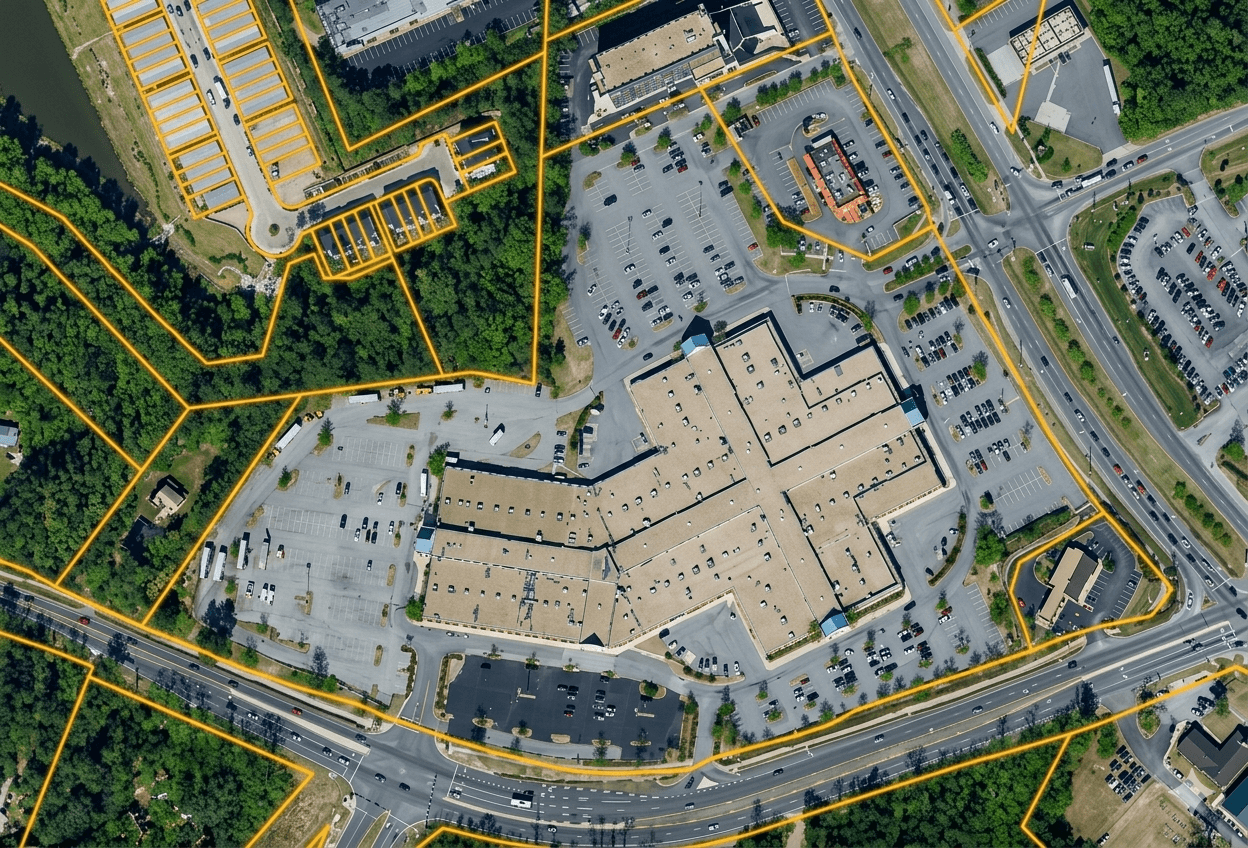
Practical Example: A 300,000 SF open-air center sits on two separate tax parcels. Parcel A (200,000 SF) contains the inline shops and junior anchors. Parcel B (100,000 SF) contains a freestanding pad the landlord sold to a bank years ago. If the lease defines pro-rata share by reference to the "shopping center" rather than the specific tax parcel, the tenant may end up subsidizing taxes on land it has no connection to. Best practice for both sides: define the tax parcel explicitly in the lease and attach the assessor's parcel number (APN) as an exhibit. |
Exclusions from the Denominator
Leases frequently exclude certain square footage from the CAM denominator — vacant space, anchor-owned parcels, or space under construction. For taxes, landlords sometimes argue that the assessor determines the parcel boundary and there is no equivalent discretion. Tenants should push back: even if the parcel is fixed, the lease can specify which improvements within that parcel are included in the denominator, and should address what happens if the landlord sells a portion of the parcel.
Issue | What to Watch For |
Denominator definition | Must tie to specific tax parcel (APN), not the broader shopping center definition |
Outparcel exclusions | Pads sold in fee or subject to ground leases should be excluded from both numerator and denominator |
Vacant land | Undeveloped portions of the parcel should not be allocated to paying tenants |
Common area buildings | Management offices, maintenance facilities — clarify whether these are in the denominator |
Future expansion | If the landlord expands the center, how does the denominator change? |
2. Ground Leases vs. Inline Retail: Critical Differences in Tax Treatment
The tax obligations of a ground lease tenant and an inline retail tenant operate in fundamentally different ways — yet the distinction is frequently glossed over, especially in mixed-use centers where both formats coexist.
Inline Retail Tenants
An inline tenant occupies space in a building owned by the landlord. The landlord holds title to both land and improvements and receives the tax bill, then passes through the tenant's pro-rata share as an operating expense. Key implications:
The assessment is on the entire parcel and building, not the tenant's space alone.
The tenant has no standing to appeal the assessment directly unless the lease specifically grants this right.
The tenant is exposed to assessment increases driven by factors unrelated to their space — a sale of the property, a renovation, or a reassessment of common areas.
Tax bills are typically reconciled annually, meaning tenants may face true-up charges 12–18 months after the tax year ends.
Ground Lease Tenants
A ground lease tenant leases the land itself and typically constructs and owns the improvements. In most jurisdictions, the ground tenant is treated as the owner of the improvements for tax purposes and receives the tax bill directly. Key implications:
The tenant bears 100% of the taxes on their parcel — there is no pro-rata sharing. The ground lease is triple net on taxes.
Because the tenant owns the improvements, they typically have standing to appeal the assessment in their own name.
Ground lease tenants should negotiate the right to receive copies of all tax bills and notices directly from the taxing authority.
If the landlord owns a master parcel with multiple ground lease pads, the allocation method between parcels should be specified in the lease.
Supplemental assessments upon sale of the fee interest can create significant unexpected tax exposure for ground tenants if not addressed.
Ground Lease Trap to Avoid:
A landlord owns a 10-acre parcel and ground leases three pads to a fast food operator, a bank, and a gas station. The assessor issues a single tax bill for the entire 10 acres. The master lease is silent on allocation methodology. If the landlord allocates taxes by land value rather than square footage, the highest-value corner pad ends up with a disproportionate share. Tenants should always negotiate a specific, objective allocation methodology — ideally tied to assessed value of each parcel as separately determined by the assessor.
3. What Taxes Can the Landlord Include?
Not all taxes are properly includable as a pass-through to retail tenants. This is an area where landlord lease forms are frequently over broad and where tenants can negotiate meaningful protection.
Clearly Permissible Tax Pass-Throughs
Real property taxes and general assessments levied on the tax parcel by the county or municipality
Special district assessments (e.g., fire district, school district levies) if tied to the real property
Personal property taxes on landlord-owned property used in common area operations
Explicitly Excluded — These Should Never Be Passed Through
Inheritance, estate, or gift taxes
Transfer or recordation taxes
Penalties and interest
Capital gains taxes
Excess profit taxes
Income, franchise, or profit taxes
The Alignment Problem: A landlord owns a 500,000 SF power center that is 95% occupied NNN. An appeal reducing taxes by $200,000 saves each tenant their pro-rata share — but the landlord only absorbs the benefit on vacant space. The landlord bears the full cost and hassle of the appeal with minimal financial upside. Without a lease requirement to appeal, many landlords will simply not bother. |
4. Tenant-Initiated Appeal Rights
Sophisticated retail tenants — particularly national chains — negotiate the right to initiate tax appeals themselves. Key provisions to negotiate:
Tenant shall have the right, but not the obligation, to initiate a tax appeal at Tenant's cost and with Landlord's reasonable cooperation.
Landlord shall not settle any tax appeal without Tenant's prior written consent if Tenant has initiated or contributed to the cost of the appeal.
Any refund or credit resulting from a successful appeal shall reduce Tenant's tax obligations for the applicable period, net of reasonable appeal costs.
Landlord shall provide Tenant with copies of all tax bills, assessments, and notices of valuation within 15–30 days of receipt.
If Landlord fails to initiate an appeal before the deadline, Tenant may do so in Landlord's name at Tenant's sole cost.
Landlord Obligation to Appeal
Some leases impose a mandatory obligation on the landlord to appeal assessments exceeding a specified threshold — most common in anchor leases and large-format tenant leases. The practical challenge is enforcement: if the landlord declines, the tenant's remedy is typically a breach of lease claim. A better construct is a self-help right — the right to pursue the appeal in the landlord's name — rather than relying solely on a covenant.
5. Tax Assessment Disclosures: What the Landlord Must Share
Transparency in tax billing is a persistent pain point in retail leasing. Tenants frequently receive a single line item — "Real Estate Taxes: $X" — with no supporting detail, making it impossible to verify accuracy, confirm whether an appeal was filed, or identify impermissible inclusions.
What Tenants Should Require Annually
Copies of the actual tax bills for the applicable tax parcel(s), including the APN and assessed value breakdown (land vs. improvements)
Documentation of any tax appeals filed, including the outcome and any refunds received
An explanation of any year-over-year increase exceeding a specified threshold (e.g., 5%)
Identification of any special assessments or bond obligations included in the tax line item
Notice of any proposed reassessment or change in assessed value, with sufficient lead time to exercise appeal rights
New Construction / Supplemental Assessments
When a shopping center is newly constructed, expanded, or significantly renovated, the assessor will issue a supplemental assessment reflecting the added value of the improvements. These bills can arrive mid-year and cover a partial period — creating a reconciliation headache and an unexpected charge for tenants. Tenants should negotiate that: (a) supplemental assessments are separately itemized in any tax reconciliation; (b) the landlord provides advance notice of any pending supplemental assessment; and (c) assessments attributable to landlord improvements to common area or shell are prorated equitably.
Practical Example — New Construction Spike: A landlord builds a new 80,000 SF lifestyle center. The land was previously assessed at $2M (taxes: ~$24,000/year). Upon completion, the assessor issues a supplemental assessment reflecting the $12M value of the improvements. The supplemental bill arrives three months into the tenants' occupancy. Without disclosure and notice obligations in the lease, tenants receive a large unexpected true-up charge with no advance warning. |
Sale / Transfer Reassessment Risk
In many U.S. jurisdictions — most notably California under Proposition 13 — the sale of a property triggers reassessment to current market value. For tenants in long-term leases, this can result in a dramatic and permanent increase in the tax pass-through with no corresponding benefit.
Example: A tenant signs a 10-year lease at a center held by the same owner for 20 years. The assessed value is $8M. Shortly after lease execution, the landlord sells the property for $35M. The center is reassessed at $35M. The tenant's tax obligation triples — a cost that was impossible to predict at lease signing.
Protections to negotiate:
Cap on tax increases following a change of ownership (e.g., taxes shall not increase by more than X% over the prior year for tenant's pro-rata share purposes)
Exclusion of reassessment amounts attributable to a premium over fair market value
A time-limited cap (3–5 years post-sale) as a compromise, allowing the tenant to adjust its business model over time
Disclosure obligation: Landlord must notify tenant in writing of any pending sale no less than 60 days prior to closing, with a good-faith estimate of the anticipated tax impact
6. Anchor vs. Inline: How Anchor Arrangements Shift Tax Burdens
In multi-tenant shopping centers, anchors often occupy their spaces under fundamentally different ownership or lease structures than inline tenants. These structures directly impact how taxes are allocated across the center.
Anchor-Owned Parcels
Many anchors own their building and land outright, having negotiated a fee purchase as a condition of their tenancy. The anchor's parcel is a separate tax parcel assessed and taxed independently — the anchor pays taxes directly to the taxing authority. The landlord's tax parcel covers only the landlord-owned improvements: inline shops, junior anchors in landlord-owned buildings, and common area land. The consequence for inline tenants is significant: they bear 100% of the taxes on the landlord's parcel, which may exclude large swaths of the center's square footage. Tenants need to understand exactly what parcel they are sharing costs on.
Dark Store and Vacant Anchor Risk
Even when anchors do not own their parcels, their leases typically limit tax exposure. Some anchor leases include provisions that reduce taxes if the anchor goes dark or ceases operations. In some cases, a closed anchor may negotiate a reduction in assessed value of its space — reducing taxes on the anchor portion of the parcel — while the landlord absorbs any shortfall rather than passing it to inline tenants. Tenants should inquire about anchor lease structures during due diligence and, if possible, obtain representations regarding the absence of any tax protection provisions in anchor leases that could shift costs to inline tenants.
BID and Special District Assessments
Business improvement district assessments are often structured on a property-by-property basis, with anchor-owned parcels paying assessments directly. Landlords sometimes include BID assessments in the operating expense pass-through for inline tenants without disclosing that anchors are paying their share separately. Tenants should require confirmation that BID assessments represent only the tenant's proportionate share of the levy on the landlord's parcel — not a disproportionate subsidy for anchor-owned parcels paying independently.
7. Base Year and Tax Stop Provisions
Tax provisions in modified gross and gross leases operate differently from pure NNN structures. Rather than paying a pro-rata share of all taxes, the tenant pays only increases above a base year amount or above a tax stop threshold.
Base Year Taxes
In a base year structure, the landlord establishes a base year (often the first year of the lease) and the tenant pays only the amount by which taxes in subsequent years exceed the base year amount. Key negotiating points:
Tenants should push for actual taxes billed, not a normalized or annualized figure that may understate the baseline.
Unlike operating expenses (which scale with occupancy), taxes are assessed on the property regardless of occupancy. Tenants should resist gross-up for taxes.
The base year amount should be fixed and cannot be retroactively adjusted — even if the landlord files an appeal for the base year and obtains a refund.
A property sale in year one can spike taxes in year two above the base year, immediately triggering overage obligations. Negotiate sale-triggered reassessment protection in base year structures.
Tax Stops
A tax stop is a fixed dollar amount per square foot above which the tenant bears responsibility for taxes. This appears in some modified gross retail leases, particularly for smaller tenants in urban centers. The risk: if the tax stop is set too low relative to current actual taxes, the tenant is immediately in overage position and effectively paying taxes from day one. Tax stops should be set at or above the current per-square-foot tax burden, with clarity on whether the stop escalates over time.
Quick Reference: Key Lease Protections by Party
Issue | Landlord Priority | Tenant Priority |
Pro-rata denominator | Shopping center as defined in lease | Specific APN; exclude sold parcels |
Tax inclusions | Broad definition including all assessments | Narrow definition; explicit exclusion list |
Appeal rights | LL controls all appeals | Tenant self-help right; refund flows to tenant |
Sale reassessment | No restriction on tax increases | Cap increase post-sale; advance disclosure |
New construction | Supplemental assessments fully passed through | Separate itemization; advance notice required |
Disclosure | Annual reconciliation statement only | Actual tax bills; APN; appeal status |
Base year | Normalized / grossed-up base year | Actual billed taxes; no retroactive adjustment |
Ground lease allocation | Landlord determines methodology | Objective formula; separate APN preferred |
Anchor tax structures | Not disclosed to inline tenants | Representations re: anchor tax provisions |
Penalties / interest | Includable as assessments | Explicitly excluded in all circumstances |
Final Takeaways
Real estate tax provisions in retail leases reward careful drafting and active negotiation. The issues covered in this guide — pro-rata share methodology, ground vs. inline distinctions, permissible inclusions, appeal rights, assessment disclosures, sale reassessment risk, new construction exposure, and anchor dynamics — are not edge cases. They arise in virtually every sophisticated retail lease negotiation and in almost every retail lease audit.
For landlords, the goal should be lease language that is clear, defensible, and administratively practical. Over broad tax provisions that include impermissible items or that fail to disclose how taxes are allocated invite disputes, lease audits, and litigation — none of which serve the landlord's interest in maintaining productive tenancies.
For tenants, the goal is transparency and proportionality: pay your fair share, no more. That requires specific, defined denominators; clear exclusion lists; the right to see actual tax bills; the ability to participate in or initiate appeals; and protection against events — a sale, a new construction assessment, an anchor going dark — that can cause taxes to spike through no fault of the tenant.
In either case, the time to address these issues is at lease negotiation — not at the first audit or the first unexpected tax bill.
We enable AI agents for tax and CAM reconciliations as well as reports across properties and portfolios. Call us today to see the demo.
Asset Managers
Portfolio visibility, critical dates and lease-up support from clean lease data. Bring your leases to the call.
Lease Administration
Long-form abstracts across every amendment, plus clause reports and estoppels. Bring your toughest lease file.
Acquisitions & Due Diligence
Bulk abstraction sized to your diligence window. Bring your deal timeline.
Landlord Rep Brokers
Every LOI checked against each landlord’s terms and your deal history. Bring a landlord’s master lease form and a recent LOI.
Every subscription includes guided setup and training. New agents arrive as they ship.